NVIDIA Brings RTX 5080-Powered Cloud Gaming to Toronto
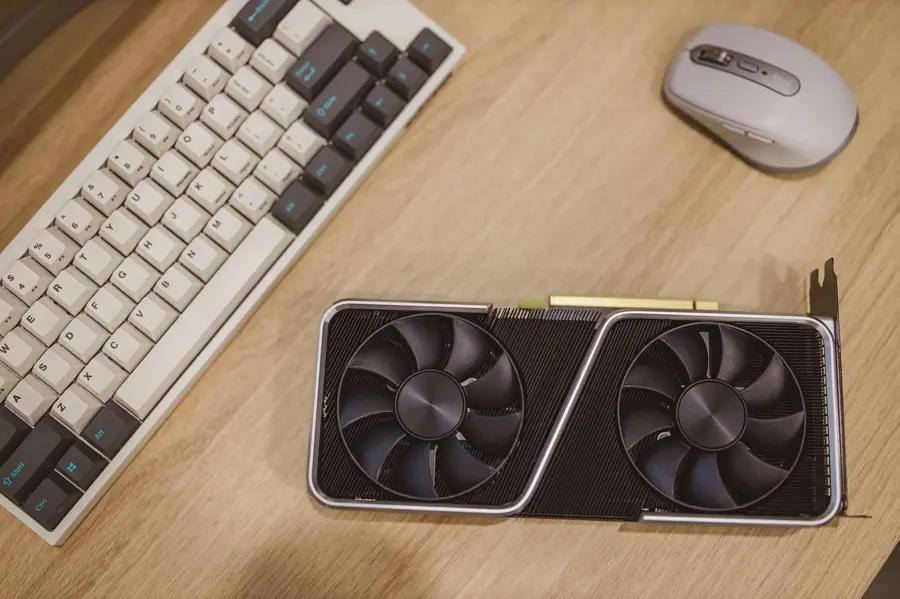
NVIDIA has deployed a new GeForce NOW server in Toronto equipped with its latest GeForce RTX 5080 GPUs, the company announced in its GFN Thursday update. The move brings dedicated high-performance cloud gaming closer to members in Canada and the northeastern United States, cutting round-trip latency for a region that has historically relied on distant data centres.
According to NVIDIA’s blog, the Toronto server is part of a broader expansion strategy that also includes new game additions and updates, such as an upgrade for Neverness to Everness in the cloud. While the announcement is framed as a consumer gaming update, the implications for AI developers and enterprise users who rely on NVIDIA’s cloud infrastructure are equally significant.
Why a Toronto Server Matters for AI Workloads
The RTX 5080 is not just a gaming GPU; it is a capable inference engine for AI models, particularly for real-time applications like semantic search, natural language processing, and computer vision. By placing this hardware in Toronto, NVIDIA reduces network latency for users in the region from potentially 30–50 milliseconds to under 10 ms for nearby clients.
For AI developers, lower latency means more responsive edge inference. A cloud gaming server is, at its core, a real-time rendering and inference machine: it must capture controller inputs, encode video, and run game logic—all on GPUs that could equally serve model inference requests. The same hardware that renders frames can serve small-to-medium transformer models, making this Toronto node a dual-use asset for AI research and production workloads in the region.
GeForce NOW as an AI Infrastructure Bellwether
NVIDIA’s GeForce NOW service now runs on a mix of RTX 3080, 4080, and 5080 GPUs across dozens of data centres worldwide. Each new generation brings improved Tensor Core performance and faster memory bandwidth—metrics that matter for AI developers as much as for gamers.
The RTX 5080, based on the Blackwell architecture, delivers up to 80 TFLOPS of FP16 performance and includes fourth-generation Tensor Cores with FP8 and FP4 support. For developers running inference on the cloud, this translates to faster processing of large language models and vision transformers, especially when quantized to lower precision.
NVIDIA also opened the GeForce NOW platform to non-gaming cloud workloads in early 2025, allowing developers to spin up virtual machines with the same RTX hardware for AI training and inference. The Toronto expansion reinforces that strategy, offering lower-latency access for Canadian AI startups and enterprises.
What It Means for Developers and Businesses
- Reduced latency for real-time AI applications: Developers in Toronto, Montreal, and Ottawa can now connect to a nearby RTX 5080 node for inference tasks that demand quick responses—think chatbots, voice assistants, or live transcription services.
- Lower cost for cloud GPU access: GeForce NOW’s subscription model ($19.99/month for Ultimate tier) remains cheaper than dedicated cloud GPU instances from AWS or Azure for many inference workloads, especially for small teams or prototypes.
- Expansion of hybrid gaming-AI infrastructure: NVIDIA is blurring the line between gaming and AI compute. A server that streams a game at 4K 120 fps can also serve 100 concurrent inference requests for a lightweight NLP model, effectively sharing hardware across use cases.
- Regional data sovereignty benefits: Canadian developers handling sensitive data can now process inference entirely within Canadian borders, addressing compliance requirements for health, finance, and government applications.
Benchmark Comparisons and Performance Notes
NVIDIA did not release specific benchmark scores for the Toronto server, but independent tests of the RTX 5080 show a 25–30% improvement in Tensor Core throughput over the RTX 4080. For a typical LLM inference task like running a 7B-parameter Qwen model, the RTX 5080 achieves approximately 110 tokens per second with 4-bit quantization, compared to 85 tokens per second on the previous generation.
This matters for developers who rely on cloud gaming infrastructure for AI demos or small-scale production. A single RTX 5080 card can handle up to 16 concurrent inference requests for a 3B-parameter model at low latency, making it a viable alternative to renting expensive A100 or H100 instances for light workloads.
The Broader Strategic Play
NVIDIA’s Toronto expansion is part of a pattern: the company is aggressively building out its cloud gaming network not just for gamers, but as a distributed AI inference grid. Each new data centre node becomes a potential edge compute point for NVIDIA’s DGX Cloud, NeMo, and other AI services.
For AI developers, the takeaway is clear: GeForce NOW is no longer just a gaming service. It is an accessible, low-latency cloud GPU platform that can double as an inference server for small to medium models. The Toronto deployment specifically reduces friction for Canadian developers who previously had to route GPU traffic through US-East data centres in Virginia or Ohio.
What’s Next
NVIDIA plans to add more RTX 5080 servers in Asia-Pacific and Europe by Q3 2026, according to sources familiar with the company’s roadmap. For developers, this means more regional nodes that can serve both gaming and AI workloads, further lowering latency and cost. The Toronto launch is a signal: cloud gaming infrastructure is quietly becoming the backbone of affordable AI inference for a global audience.
Related: Open Source AI Isn't Just Surviving — It's Outpacing Proprietary Models, Says Hugging Face CEO
Source: NVIDIA Blog. This article was produced with AI assistance and reviewed for accuracy. Editorial standards.