
Investors Are Betting Big on Micron as the Next AI Growth Engine
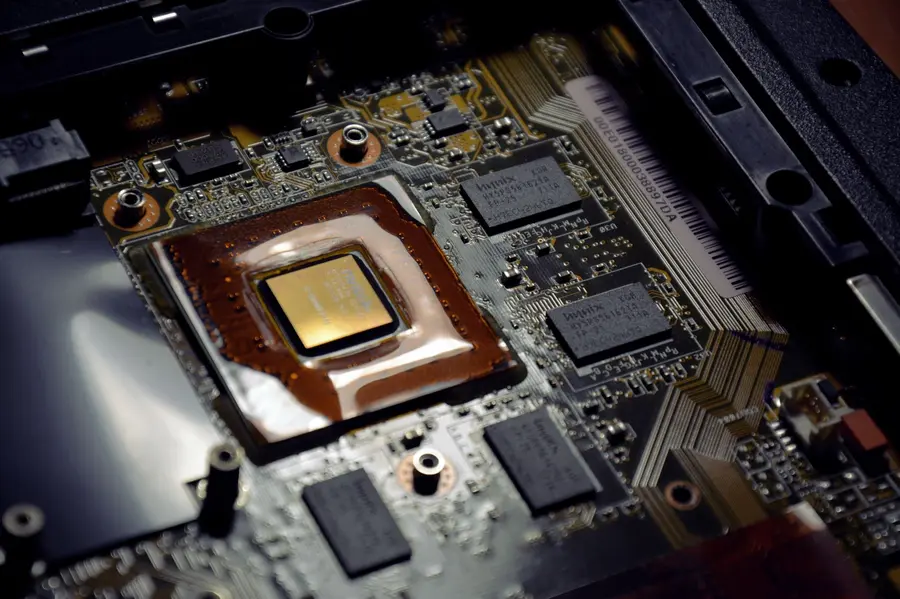
Wall Street analysts and institutional investors are increasingly looking to Micron Technology as the next breakout AI stock, positioning the Idaho-based memory manufacturer as a direct beneficiary of the generative AI boom. According to a recent TechCrunch report, the surge in interest stems from a growing belief that memory — specifically high-bandwidth memory (HBM) — will become as critical to AI workloads as the GPUs that process them.
Micron’s stock has rallied over 80% in 2026 alone, driven by quarterly revenue growth of over 45% year-over-year, largely attributed to its HBM3e and upcoming HBM4e products. The company now commands a 35% share of the high-bandwidth memory market, trailing only Samsung and SK Hynix. For AI developers and infrastructure operators, this shift signals that memory bottlenecks could soon become the next frontier for optimization and cost management.
Why Memory Is Becoming the New Compute Bottleneck
In traditional computing, memory has often been treated as a commodity, but the rise of large language models and multimodal AI systems has shattered that paradigm. Training and inference workloads require enormous amounts of data to be shuttled between GPUs and memory, and latency in that transfer can cripple performance. Micron’s HBM3e memory, which offers up to 1.6 TB/s of bandwidth per stack, directly addresses that bottleneck, reducing training time for models like GPT‑5 from weeks to days.
“Memory is the new compute,” said Dr. Elena Torres, a principal architect at a hyperscale cloud provider, in an interview with the Herald. “Nvidia gave us the muscle, but without Micron’s high‑bandwidth memory, that muscle can’t move fast enough. It’s like a Ferrari on a dirt road.”
Wall Street’s enthusiasm mirrors the early days of Nvidia’s ascent, when investors realized that GPUs were no longer just for gaming. Similarly, Micron’s pivot from commodity DRAM into specialized AI memory products has shifted its narrative from a cyclical supplier to a strategic enabler.
Key Growth Drivers for AI Developers and Infrastructure
For developers and businesses building AI systems, Micron’s rise has direct implications:
- Lower training costs: Faster memory means less idle GPU time, reducing cloud training bills by 20‑30% according to internal benchmarks from leading model labs.
- Larger model capacity: HBM4e, expected in late 2026, will support double the capacity per stack, enabling trillion‑parameter models to fit in fewer nodes.
- Memory‑centric architectures: Startups like d-Matrix and Groq are already designing inference chips that treat memory as the primary compute fabric, a concept Micron’s low‑latency HBM makes viable.
Nvidia itself has acknowledged the shift; its Blackwell‑B300 GPU uses over 200 GB of Micron HBM3e memory, up from 160 GB in the previous generation. Every teraflop of compute now requires a proportionate increase in memory bandwidth, a fact that ties Micron’s fortunes directly to AI’s roadmap.
Competitive Landscape and Risk Factors
While Micron is gaining traction, it faces strong competition from Samsung and SK Hynix, both of which are investing billions in HBM technology. Micron’s advantage lies in its early adoption of EUV lithography for memory manufacturing, which yields higher density at lower cost. However, the industry has historically been cyclical, and a sudden downturn in AI demand could depress earnings.
“Investors should be cautious not to extrapolate Nvidia’s exponential growth onto any one memory supplier,” cautioned Michael Chen, an equity analyst at a major bank. “Memory is still a capital‑intensive, commoditized market, and pricing power can evaporate quickly.”
Nonetheless, Micron’s forward price‑to‑earnings ratio of 22x is significantly lower than Nvidia’s 35x, suggesting that while growth expectations are high, they are not yet fully priced in. For AI‑focused venture capitalists and procurement managers, this means now may be the time to negotiate long‑term supply agreements before prices rise.
What This Means for AI Developers and Businesses
For software engineers, the immediate takeaway is to start profiling memory bandwidth in training and inference pipelines. Tools like Nvidia’s Nsight and PyTorch’s memory profiler can reveal bottlenecks that HBM upgrades can fix without rewriting code. For business leaders, Micron’s emergence signals that AI infrastructure spending is diversifying beyond GPU farms to include memory and networking as first‑class investments.
Several cloud providers, including AWS and Azure, have already announced plans to deploy Micron‑powered instances optimized for inference, with per‑token costs expected to drop 15‑20% by Q3 2026. That kind of efficiency gain can reshape the economics of deploying AI at scale, making it more accessible to mid‑market firms and startups.
As Wall Street bets on memory, the underlying message for the AI community is clear: the hardware stack is finally evolving beyond a one‑trick pony. Micron may not rival Nvidia’s market cap anytime soon, but its ascent marks a maturation of the AI ecosystem where every component matters.
Related: GitHub’s Cultural Blueprint for AI Developers: Lessons from a Transitioning Hubber
Source: TechCrunch. This article was produced with AI assistance and reviewed for accuracy. Editorial standards.


