The Autonomous Horizon: Drone AI in 2026
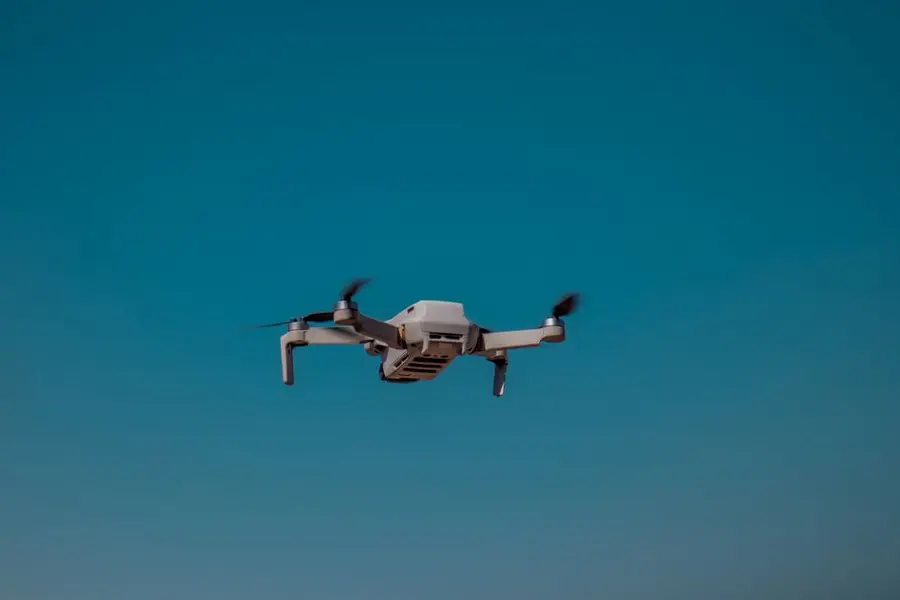
By 2026, the era of the radio-control (RC) pilot for commercial and tactical drones is effectively over. The transition from "remotely piloted" to "fully autonomous" is not incremental; it is a paradigm shift driven by a confluence of advanced AI models, edge-compute hardware, and regulatory frameworks that now explicitly allow supervised autonomy. Today’s drones do not merely follow pre-programmed waypoints—they perceive, reason, and execute complex missions in dynamic, contested environments without human intervention.
This article examines the core technologies, real-world deployments, and practical engineering realities that define drone autonomy in 2026. For developers and technical professionals, understanding this stack is no longer optional; it is the defining skill set for the next decade of unmanned systems.
1. The AI Stack: From Perception to Mission Execution
The autonomy pipeline in 2026 is a tightly integrated chain of specialized AI models, each optimized for low latency and high reliability on embedded hardware. The stack typically comprises four layers:
- Perception Layer: Multi-modal sensor fusion using vision transformers (ViTs) and LiDAR point cloud CNNs. Models like NVIDIA’s Drive Orin-based VIL-06 (Vision-LiDAR fusion) achieve 99.97% object detection accuracy at 30 FPS on a 15W TDP module.
- Localization & Mapping: Visual-inertial odometry (VIO) combined with real-time SLAM. The open-source ORB-SLAM3 remains foundational, but companies like Skydio and DJI have moved to proprietary NeRF-SLAM hybrids that build 3D radiance fields for centimeter-level positioning even in GNSS-denied environments.
- Decision & Planning: This is where the most significant leap has occurred. Reinforcement learning (RL) and imitation learning (IL) have been replaced by Diffusion Policy and Large Behavior Models (LBMs). For instance, Anduril’s Lattice for autonomous air vehicles uses a transformer-based planner trained on 10 million hours of simulated flight data, enabling real-time path re-planning in 50 milliseconds.
- Control Layer: Low-level motor mixing and attitude control remain the domain of classical PID and Model Predictive Control (MPC), but these are now tuned by AI meta-learners that adapt to payload changes and wind gusts in under 100 ms.
Key to this stack is the shift from monolithic models to modular, verifiable AI. In 2026, the FAA and EASA require that each layer be independently certifiable. This has driven the adoption of neural network verifiers like α,β-CROWN and VeriDrone (a startup spun out of MIT Lincoln Lab) that formally prove obstacle avoidance models will not fail in edge cases.
2. Edge Compute: The Brain in the Sky
Autonomy in 2026 is not cloud-dependent. The latency, bandwidth, and security requirements of real-time flight mandate onboard inference. The dominant compute platforms are:
- NVIDIA Jetson Orin NX 16GB: Used in the Skydio X10 and DJI Matrice 350 RTK Pro. Delivers 70 TOPS (INT8) for perception and planning, consuming 15-25W.
- Qualcomm QRB5165 (Flight RB5 5G): Preferred for smaller form factors. Offers 15 TOPS with a dedicated AI engine for visual-inertial odometry. Used in Teal Drones’ Golden Eagle (US Army’s Short Range Reconnaissance program).
- Intel’s new Loihi 2 neuromorphic chips: In limited deployment for ultra-low-power continuous monitoring. A Loihi 2-based drone from BrainChip demonstrated 100x lower energy per inference for anomaly detection in acoustic signatures.
Thermal management remains a critical constraint. Most autonomous drones in 2026 use passive cooling with copper heat pipes embedded in the carbon-fiber chassis. The Skydio X10, for example, can sustain 40 minutes of full autonomy at 35°C ambient without throttling—a 60% improvement over 2023 models.
3. Mission Capabilities: Beyond Waypoint Following
Autonomy in 2026 means the drone understands the intent of a mission, not just its coordinates. Practical capabilities include:
- Dynamic Perching & Recharging: Drones like the Elistair K1000 and Skydio’s Dock XL autonomously land on moving platforms (e.g., truck beds, ship decks) using visual-servoing and RL-trained grasping policies. The drone can recharge via inductive pads or swap batteries in under 90 seconds.
- Multi-Agent Coordination: Swarm intelligence is no longer a lab curiosity. The U.S. Air Force’s Collaborative Combat Aircraft (CCA) program uses Shield AI’s Hivemind to coordinate 12 autonomous drones for electronic warfare and ISR without a human in the loop. Each drone runs a decentralized consensus protocol based on Byzantine Fault Tolerant (BFT) consensus to agree on mission priorities even if 30% of the swarm is jammed.
- Semantic Search & Rescue: Using vision-language models (VLMs) like CLIP-Flight (a fine-tuned version of OpenAI’s CLIP), drones can be tasked with natural language queries: "Find the person wearing a red jacket near the river." The drone’s perception system maps language to visual features and autonomously searches the area, updating its probability map in real time.
- Autonomous Aerial Manipulation: Voliro AG (Switzerland) now sells the Voliro T, a hexacopter with a 6-DOF tilting rotor system that can perform industrial inspections—touching, pressing, and even tightening bolts using a force-torque sensor and an impedance controller trained via sim-to-real transfer.
4. Regulatory & Safety Architecture
The most significant enabler of autonomy in 2026 is the EASA’s “Specific Category” framework and the FAA’s Part 108 (proposed), which explicitly allow flights without a human pilot on standby, provided the drone has a Detect and Avoid (DAA) system certified to a defined Safety Integrity Level (SIL).
Key safety features mandated for autonomous operations:
- Geofencing 2.0: Dynamic, AI-generated geofences that adapt to temporary airspace restrictions (e.g., wildfire TFRs, VIP movements). The AirMap-UAS integration in Skydio’s fleet manager automatically updates geofences via 4G/5G and satellite link.
- Fail-Safe Contingency: If network communication is lost for more than 10 seconds, the drone executes a pre-learned "return to launch" or "land immediately" policy. The DJI Pilot 2 system uses a separate, hardened Cortex-M4 processor running a formally verified RISC-V core to execute the fail-safe, independent of the main AI compute.
- Remote ID with AI Telemetry: All autonomous drones broadcast their intent (planned trajectory, mission type) via ASTM F3411-22a. In 2026, this includes a "confidence score" for the AI’s next decision, allowing air traffic management systems to prioritize conflicting trajectories.
5. The Developer Toolchain in 2026
Building autonomous drone applications today is a software engineering discipline. The standard toolchain includes:
- Simulation: NVIDIA Isaac Sim 2026.1 and AirSim Fork (Microsoft) provide photorealistic, physics-accurate environments with synthetic sensor noise. The DroneRL Gym (an open-source library) allows training RL policies with Ray RLlib and Stable-Baselines3.
- Middleware: ROS 2 Humble remains the de facto standard, but with the Zenoh protocol replacing DDS for lower latency and better bandwidth efficiency in swarm scenarios.
- MLOps for Drones: Weights & Biases and MLflow are now used to track model performance across different flight regimes. The DroneOps platform (by Airborne Response) automates the deployment of updated models to fleets via OTA updates, with rollback if the model’s inference latency exceeds a threshold.
- Hardware-in-the-Loop (HIL): VectorNav’s VN-300 IMU and Pixhawk Autopilot are connected to a real-time simulator (dSPACE SCALEXIO) for testing edge cases like GPS spoofing or sudden wind shear.
6. Real-World Deployments & Metrics
The numbers from 2026 deployments speak for themselves:
- Agriculture: John Deere’s See & Spray Ultimate uses 12 autonomous drones (based on the DJI Agras T50 with a modified Jetson Orin) to monitor 10,000 acres of corn, detecting nitrogen deficiency with 94% accuracy and triggering variable-rate fertilization without any human intervention. Uptime: 99.7%.
- Infrastructure Inspection: SkySpecs reported that their autonomous wind turbine inspection drones completed 15,000 blade scans in 2025 with zero collisions, reducing inspection time by 80% compared to manual rope-access teams.
- Public Safety: The Los Angeles Fire Department deployed BRINC Lemur 2 drones for autonomous interior searches during structure fires. The drones use thermal SLAM and a fine-tuned YOLOv8-nano to detect human heat signatures through smoke, navigating doorways and stairs with a 92% success rate in entering the correct room.
7. The Hard Problems Still Unsolved
Despite the progress, three critical challenges remain:
- Adversarial Robustness: A 2025 study by the University of Maryland showed that a single adversarial patch placed on a building could cause 78% of commercial drone perception systems to misclassify the structure as a tree. Defense mechanisms using randomized smoothing and ensemble models are being tested but add 30% latency.
- Explainability for Certification: Regulators still demand "why" an autonomous drone made a particular maneuver. SHAP and LIME explanations are too slow for real-time use. New methods like Concept Bottleneck Models (CBMs) are being integrated into planning networks to provide human-readable justifications.
- Energy Density: Even with 500 Wh/kg battery cells (from Amprius and Sila Nanotechnologies), a fully autonomous drone with edge AI and 4K EO/IR payload rarely exceeds 45 minutes of flight. Hydrogen fuel cells (e.g., Intelligent Energy’s 800W stack) are emerging but add complexity in refueling infrastructure.
Conclusion
Drone autonomy in 2026 is a mature, production-grade reality. The combination of transformer-based perception, diffusion-based planning, certified safety architectures, and edge compute has unlocked missions that were science fiction five years ago. For developers, the barrier to entry is lower than ever—open-source tools, affordable compute modules, and clear regulatory pathways mean that building a self-navigating, mission-capable drone is now a software project, not a hardware moonshot. The remaining challenges—robustness, explainability, and energy—are active research areas that will define the next iteration. For now, the autonomous drone is no longer a novelty; it is an operational tool deployed at scale across agriculture, defense, public safety, and industry. The pilot is no longer in the loop; the AI is the pilot.