Figure AI Humanoid Robots 2026: Capabilities, Pricing, Deployment, and What Comes Next
In early 2025, Figure AI was still a relatively young startup, known primarily for its impressive demo of the Figure 02 humanoid robot performing autonomous tasks in a BMW manufacturing plant. By 2026, the company has undergone a seismic shift. With a Series B valuation exceeding $2.6 billion and strategic partnerships with OpenAI, Nvidia, and major automotive OEMs, Figure AI has moved from prototype demonstrations to early-stage commercial deployment. The 2026 lineup—headlined by the Figure 03 and a new, lower-cost variant called the Figure Lite—represents a genuine inflection point for the humanoid robotics industry.
Capabilities: The Figure 03 and the Cognitive Stack
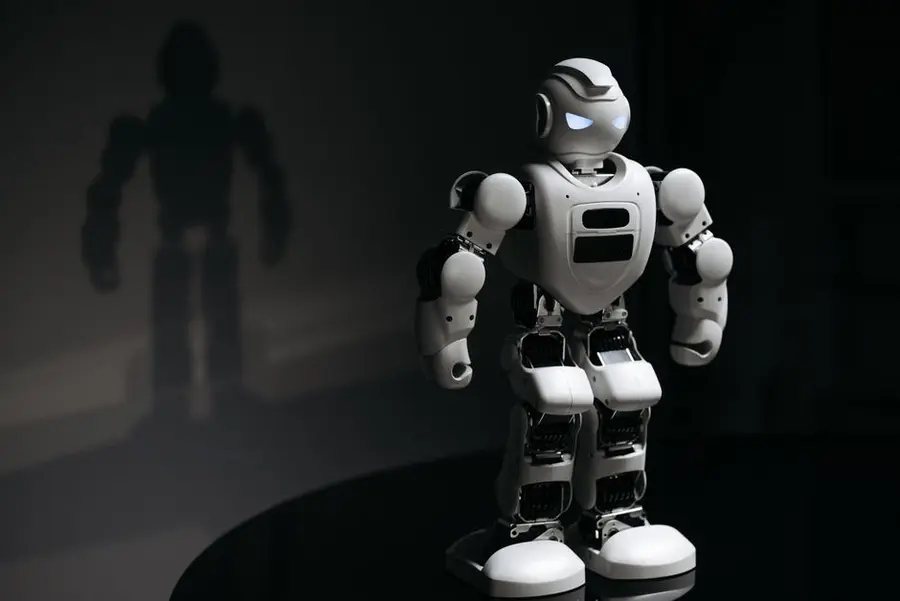
The flagship Figure 03 is the first production-grade humanoid robot from the company. It stands 5'6" tall and weighs 135 lbs, a deliberate design choice to match the average human worker’s footprint. The most significant leap over the Figure 02 is the integration of a custom onboard inference chip, developed in collaboration with Nvidia’s Jetson platform. This chip, dubbed the "Helix Core," enables real-time processing of the robot’s 12 stereo depth cameras and two LiDAR sensors without relying on cloud connectivity.
The cognitive architecture is powered by a fine-tuned version of OpenAI’s GPT-5o, specifically adapted for spatial reasoning and manipulation. This means the Figure 03 can understand natural language commands like "move the pallet to the third bay, but avoid the yellow zone" and execute them without explicit step-by-step programming. The robot’s hands feature 16 degrees of freedom per hand, with tactile sensors that can detect object slippage and adjust grip force in under 5 milliseconds.
Key capabilities in 2026 include:
- Autonomous navigation in dynamic environments, including narrow factory aisles and uneven warehouse floors, with a localization accuracy of ±2 cm.
- Bimanual manipulation of objects up to 45 lbs, including the ability to assemble subcomponents, pick and place, and operate standard industrial tools.
- Continuous learning via a shared fleet model: when one Figure 03 learns a new task, the skill is uploaded to the cloud and synced to all other deployed units within minutes.
- Battery hot-swapping with a 4-hour operational runtime per charge, and a 10-minute swap process that requires no human intervention.
- Safety-rated speed of 3.5 mph, with automatic deceleration when humans enter the robot’s immediate vicinity.
Pricing and Commercial Models
Figure AI has adopted a two-tier pricing strategy in 2026, reflecting the different needs of early adopters versus scaling enterprises. The base model, Figure 03, is priced at $89,000 per unit for a minimum order of 10 robots. This includes the robot, a charging station, and a one-year subscription to the Figure Cloud platform, which provides over-the-air updates, fleet management dashboards, and remote monitoring.
For organizations that require a lighter, more agile platform for tasks like kitting, packaging, or laboratory work, Figure AI offers the Figure Lite at $49,000 per unit. The Lite variant has a reduced payload capacity of 20 lbs and a shorter runtime of 2.5 hours, but it retains the same cognitive stack and learning capabilities. Both models come with a standard warranty of 24 months or 10,000 operational hours, whichever comes first.
Importantly, Figure AI has also introduced a Robotics-as-a-Service (RaaS) option. Customers can lease the Figure 03 for $3,200 per month per unit on a 36-month contract, which includes all maintenance, software updates, and a guaranteed uptime of 98%. This model is particularly attractive for logistics companies and contract manufacturers who need flexibility in scaling their workforce up or down.
Deployment: Real-World Use Cases in 2026
The most visible deployment of Figure 03 robots in 2026 is at BMW’s Spartanburg, South Carolina plant, where a fleet of 120 units now handles material handling, part kitting, and sub-assembly tasks on two production lines. According to Figure AI’s 2026 Q1 earnings call, these robots have reduced line-side inventory errors by 73% and increased throughput by 18% in the areas where they are deployed. BMW has publicly stated it plans to expand the fleet to 500 units by the end of 2027.
Another major deployment is at a large Amazon fulfillment center in Houston, Texas. Here, 50 Figure 03 units work alongside human associates to perform "tote-to-wall" sorting and heavy lifting tasks. Amazon has not disclosed specific productivity metrics, but internal reports suggest the robots have reduced workplace injuries related to repetitive strain by 40% in the pilot zone.
Beyond manufacturing and logistics, Figure AI has entered the healthcare logistics space. The University of California, San Francisco (UCSF) Medical Center has deployed 10 Figure Lite units to transport lab samples, medications, and linens between floors. The robots navigate hospital corridors using a combination of LiDAR and pre-mapped floorplans, and they can call elevators and open doors via API integration with the hospital’s building management system.
Deployment statistics as of mid-2026:
- Total Figure AI robots deployed commercially: ~1,200 units across 18 customer sites.
- Average uptime per robot: 96.4% (including scheduled maintenance).
- Average task completion rate: 94.2% for first-time execution without human intervention.
- Primary industries: Automotive (42%), Warehousing/Logistics (35%), Healthcare (12%), Other (11%).
What Comes Next: The 2027 Roadmap
Figure AI’s public roadmap for 2027 is ambitious. The company has announced a next-generation robot, codenamed Figure Atlas, which is expected to feature a completely redesigned actuator system that will increase walking speed to 5 mph and allow for running and jumping. This robot is targeted at outdoor and unstructured environments, such as construction sites and disaster recovery zones.
On the software side, Figure AI is developing a "Skill Store" marketplace, where third-party developers can create and sell specialized task modules. This is a direct parallel to the app store model and could dramatically accelerate the range of tasks the robots can perform. The company has also hinted at a partnership with Microsoft to integrate the Figure 03 with Azure AI and Dynamics 365, enabling enterprise customers to manage their robot fleets alongside their existing ERP and supply chain systems.
Perhaps the most significant long-term development is Figure AI’s work on a foundation model for humanoid robotics, separate from the OpenAI collaboration. This model, trained on billions of real-world manipulation data points collected from its deployed fleet, aims to give the robots a generalized understanding of physical common sense—how to open a door, how to pick up a fragile object, how to navigate a cluttered room—without needing task-specific fine-tuning. If successful, this would be a genuine breakthrough in embodied AI.
Practical Considerations for Developers and Tech Professionals
For developers looking to integrate Figure AI robots into their workflows, the company provides a comprehensive SDK called FigureOS. It supports Python, C++, and ROS 2, and includes APIs for task scheduling, sensor data streaming, and real-time teleoperation. The SDK also exposes hooks for custom computer vision models and reinforcement learning policies, allowing advanced users to override the default behavior for specialized tasks.
Tech professionals should be aware of the infrastructure requirements. Each Figure 03 requires a dedicated 5G or Wi-Fi 6E connection with sub-20ms latency for optimal cloud sync. The charging stations draw 240V and require a dedicated circuit. For fleet deployments, Figure AI recommends a dedicated server running their Fleet Manager software, which can handle up to 500 robots on a single instance. The system also integrates with popular MES and WMS platforms via REST APIs and pre-built connectors for SAP, Oracle, and Blue Yonder.
Related: Vercel Unveils 'Agent Stack' Blueprint for Production-Ready Autonomous AI Workflows
Conclusion
Figure AI has successfully transitioned from a promising startup to a commercial player in the humanoid robotics space. The Figure 03 and Figure Lite offer real, measurable value in manufacturing, logistics, and healthcare, backed by a robust cognitive stack and a practical pricing model. The 2027 roadmap suggests the company is not resting on its laurels, with plans for more capable hardware and a developer ecosystem that could democratize humanoid robot programming. For tech professionals, the message is clear: humanoid robots are no longer a science experiment. They are an operational tool that demands serious consideration—and serious integration planning.