The Industrial Robotics Revolution: NVIDIA Isaac in 2026
By 2026, the line between simulation and reality has effectively vanished in the world of industrial robotics. At the center of this transformation sits the NVIDIA Isaac platform, a comprehensive ecosystem of hardware, software, and AI models that has redefined how robots learn, perceive, and act. No longer confined to rigid, pre-programmed tasks, industrial robots powered by Isaac are now capable of real-time adaptation, fine-motor manipulation, and autonomous decision-making in chaotic factory environments. This article provides a deep technical breakdown of the platform as it exists today, detailing the core components, the AI models driving the change, and the practical implications for developers and system integrators.
Core Architecture: From Omniverse to the Robot
The NVIDIA Isaac platform in 2026 is built on a three-tier architecture: simulation and synthetic data generation, AI model training and optimization, and on-robot inference. The foundation remains NVIDIA Omniverse, which has evolved into a real-time digital twin environment capable of simulating physics at a level of fidelity that is virtually indistinguishable from the real world. Factories running Omniverse can simulate millions of operational hours, including rare edge cases like power surges, material slippage, or component jams, all before a single physical robot is deployed.
The key components of the current Isaac stack include:
- Isaac Sim 2026.1: The latest iteration of the simulation engine, now supporting multi-GPU distributed rendering for massive warehouse-scale environments. It integrates directly with major CAD formats and PLC data streams.
- Isaac ROS 3.0: The robotics middleware layer, optimized for NVIDIA Jetson Orin and the new Jetson Thor modules. It provides hardware-accelerated packages for perception, localization, and manipulation.
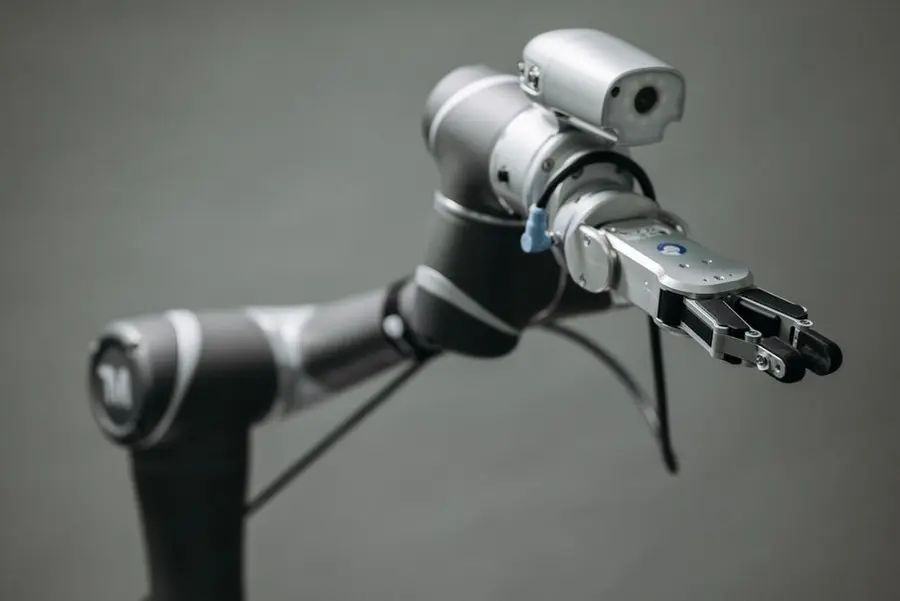
- Isaac Manipulator: A collection of AI models and tools specifically designed for articulated robotic arms. It includes the foundational "FoundationPose+" model for 6-DoF object pose estimation.
- Isaac Perceptor: A suite of multi-camera, 3D perception libraries that enable mobile robots and autonomous guided vehicles (AGVs) to navigate dynamic environments without pre-mapped routes.
For developers, the most significant change in 2026 is the shift toward "Sim-to-Real" transfer as a standard workflow. A robot trained exclusively in Isaac Sim can be deployed to a physical unit with near-zero performance degradation, thanks to domain randomization techniques that expose the AI model to millions of simulated lighting conditions, textures, and physics perturbations during training.
The AI Models Powering the Platform
NVIDIA has invested heavily in developing foundation models specifically for robotics, moving away from general-purpose vision models. The two most critical models in the 2026 ecosystem are Isaac GR00T (Generalist Robot 00 Transformer) and Project GROOT (Generalist Robot 00 Technology). While GR00T focuses on manipulation and human-robot interaction, GROOT is a general-purpose model for locomotion and navigation.
Key model capabilities as of early 2026:
- FoundationPose+: Achieves sub-millimeter pose estimation accuracy on unseen objects at 60 FPS on Jetson Thor. It requires only a single RGB image for initialization.
- Isaac VLA (Vision-Language-Action): A multimodal model that allows operators to command robots using natural language. For example, a factory worker can say, "Pick up the blue bracket from the third tray and place it on the assembly jig," and the robot executes the task without explicit programming.
- CuRobo: A GPU-accelerated motion planning library that reduces collision-free path computation from seconds to milliseconds. In 2026, CuRobo supports real-time replanning for robots operating in shared spaces with human workers.
- Reinforcement Learning (RL) Gym: Integrated directly into Isaac Sim, this environment allows developers to train policies using PPO (Proximal Policy Optimization) and SAC (Soft Actor-Critic) algorithms, with automatic hyperparameter tuning via NVIDIA Nemo.
One of the most practical advancements is the Isaac AI Manager, a cloud-based service that monitors deployed robots, collects edge-case data, and automatically retrains models. In 2026, this system is used by companies like Foxconn and BMW to continuously improve their fleet performance, with some factories reporting a 40% reduction in failure rates within three months of deployment.
Hardware Ecosystem: Jetson Thor and the Edge
No discussion of the Isaac platform is complete without examining the hardware that runs it. The NVIDIA Jetson Thor module, released in late 2025, is the current flagship for on-robot AI. It features a 256-core GPU based on the Blackwell architecture, a dedicated transformer engine, and a 32-core ARM CPU. Crucially, Thor includes a hardware-based safety island for functional safety (ISO 13849) certification, making it viable for collaborative robot (cobot) applications without external safety controllers.
For industrial PCs and server-grade deployments, the NVIDIA RTX 6000 Ada Generation cards remain popular, but the 2026 trend is toward disaggregated computing. Robots stream sensor data over high-bandwidth 5G or Wi-Fi 7 to a central cluster of L40S GPUs for heavy inference, while the Jetson Thor handles latency-critical tasks like force feedback and emergency stopping. This hybrid architecture, supported by NVIDIA's Isaac Enterprise Manager, allows factories to scale compute resources dynamically based on the number of active robots and task complexity.
Key hardware specifications for developers in 2026:
- Jetson Thor: 256 Tensor Cores, 64GB unified memory, 275 TOPS (INT8), 65W typical power draw.
- Isaac GMSL Camera: A new global-shutter, 12-megapixel camera with integrated IMU, designed for high-speed robotic manipulation. Supports up to 10 meters of cable without signal degradation.
- Isaac Tactile Sensor: A force-sensing fingertip module that provides 1,024 taxels per pad, enabling precise grip force control for delicate assembly tasks like inserting pins into circuit boards.
Practical Workflows for Developers
For a developer building a new robotic application in 2026, the typical workflow using Isaac is streamlined but powerful. The process begins in Isaac Sim, where the developer imports a CAD model of the robot and the environment. Using the Isaac Workbench—a new visual programming interface—the developer defines tasks by combining pre-built AI models from the Isaac Model Zoo. For example, a bin-picking task might combine FoundationPose+ for object detection, CuRobo for motion planning, and a custom RL policy for grip optimization.
Once the simulation is stable, the developer generates synthetic data using Isaac's Data Factory tool, which can produce 100,000 labeled images in under an hour on a single DGX workstation. This data is used to fine-tune the Isaac VLA model via transfer learning, typically requiring only 100-200 real-world images to achieve production-grade accuracy. The model is then quantized using NVIDIA TensorRT and deployed to the Jetson Thor via the Isaac Package Manager.
Real-time monitoring is handled by the Isaac Telemetry Service, which streams inference logs, joint positions, and system health metrics to a Grafana dashboard. In 2026, most deployments use a digital twin that mirrors the physical robot in real-time, allowing operators to simulate interventions before executing them on the live system.
Industry Adoption and Real-World Results
The impact of the Isaac platform in 2026 is measurable across multiple industries. At a major automotive OEM, a line of 50 collaborative robots using Isaac Perceptor and CuRobo reduced part transfer times by 35% and eliminated all collisions with human workers over a six-month period. In electronics manufacturing, a company using Isaac Manipulator for surface-mount device (SMD) placement achieved a 99.97% first-pass yield, matching the performance of dedicated pick-and-place machines but with the flexibility to handle 200 different part types without retooling.
In logistics, the warehouse automation provider Geek+ deployed over 10,000 autonomous mobile robots (AMRs) using Isaac Perceptor in 2025 alone. These robots navigate using a combination of visual SLAM and semantic segmentation, allowing them to operate in spaces where barcodes or reflectors are impractical. The result was a 50% reduction in navigation failures compared to the previous generation of laser-based systems.
Related: NVIDIA's 45°C Liquid Cooling Breakthrough Slashes AI Data Center Energy Costs
Conclusion
The NVIDIA Isaac platform in 2026 represents a mature, production-ready ecosystem that has fundamentally altered the economics of industrial automation. By tightly integrating high-fidelity simulation, domain-specific foundation models, and powerful edge hardware, NVIDIA has enabled a workflow where robots are no longer programmed but taught. For developers and system integrators, the barriers to entry have lowered dramatically—a single engineer can now deploy a complex manipulation task in weeks, not months. As the platform continues to evolve, with models becoming more general and hardware more capable, the vision of a fully autonomous, self-optimizing factory floor is no longer a distant goal; it is the operational reality of 2026.