
You don't need to be Amazon to use robots in your business. That's probably the single most important thing to understand before reading another word of this article.
For years, robotics was a game for deep-pocketed corporations with dedicated engineering teams and seven-figure automation budgets. A small manufacturer in Ohio or a regional warehouse in Texas couldn't even get a quote without laughing at the price. But that's changing fast and the small business owners who recognize this shift early are the ones who'll be running leaner, more profitable operations a few years from now while their competitors wonder what happened.
This guide covers what robotics actually looks like in a real business context: the use cases that make financial sense, the industries where it's already happening, what it costs, what the ROI looks like, and critically what to watch out for before you spend a dime.
Why Robotics Went From "Fortune 500 Only" to "Actually, Maybe You"
Here's a number worth sitting with. In some areas of robotics and smart sensors, costs have dropped by as much as 80 percent in just the past few years. What was costing around $750,000 not long ago might be closer to $100,000 today.
That's not a small shift. That's the difference between "not even worth discussing" and "let me run the numbers."
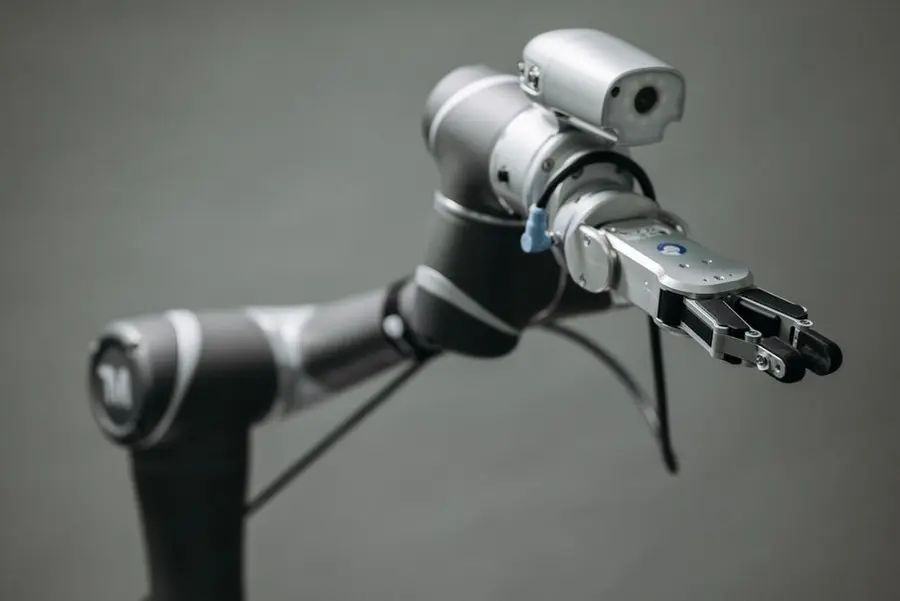
A few things are driving this. First, collaborative robots — called cobots — have come down dramatically in price and become dramatically easier to set up. Entry-level collaborative robots now start around $10,000 for basic functionality, with mid-range cobots in the $40,000 to $60,000 range offering higher payloads and features like force control for assembly tasks. That's still real money, but it's not the $300,000 industrial arm that required a team of engineers to install.
Second, a business model shift called Robots-as-a-Service — RaaS for short — is making robotics accessible without big upfront capital. RaaS models allow enterprises to benefit from robotic automation with no fixed capital involved, letting RaaS providers specializing in specific industries offer sophisticated solutions quickly. Think of it like leasing equipment rather than buying it. You pay monthly, scale up or down as needed, and someone else handles the maintenance headaches.
Third, and this is the one that often gets overlooked: labor shortages are making automation look a lot more attractive whether you want it to or not. The National Association of Manufacturers projects that 2.1 million manufacturing jobs could go unfilled by 2030. The average age of a skilled welder in the U.S. is 55, and there aren't enough younger workers entering manufacturing trades to replace retiring veterans. If you're running a small manufacturing or logistics operation, you've probably already felt this. Robots don't call in sick. They don't quit for $2 more an hour somewhere else.
What "Robotics in Business" Actually Means (It's Broader Than You Think)
When most people hear "business robotics," they picture a car factory with giant metal arms welding chassis together. That picture is real, but it's maybe 20% of the actual story.
Business robotics today covers a surprisingly wide range of applications. Some involve physical machines that move, lift, and sort. Others involve software robots that handle digital tasks — these fall under Robotic Process Automation, or RPA, which is a whole category on its own. And then there's everything in the middle: autonomous mobile robots that navigate warehouse floors, vision systems that inspect products for defects, cobots that work right next to your employees on a packaging line.
The unifying idea is this: any repetitive, rule-based task that doesn't require human judgment is a candidate for automation. When you look at it that way, most businesses have more automation opportunities than they realize.
The Business Use Cases That Actually Make Sense for SMBs
Let's get specific. Here are the areas where small and mid-sized businesses are seeing real returns, not just interesting pilots.
Warehousing and Order Fulfillment
This is probably the most active area of robotics adoption for SMBs right now, and it makes sense why. Warehousing is full of exactly the kind of repetitive physical tasks robots handle well: picking products off shelves, packing boxes, moving pallets from one place to another.
Autonomous mobile robots (AMRs) can eliminate non-productive walking time, which makes up 60% of manual picking time according to Gartner. Picking robots can also speed up processes during busy periods like peak season — extra robots can be added when demand picks up and removed once things quiet down.
That last point is worth underlining for any business owner who's dealt with the chaos of peak season hiring. Bringing on 15 temporary workers for six weeks, training them, watching half of them not show up, then letting them all go — it's exhausting and expensive. Scalable robotic systems don't have that problem.
Manufacturing and Assembly
The top applications for robotics in industrial companies are palletization and packaging, material handling and ground movement, and goods receiving, unloading, and storage. These aren't glamorous tasks, but they're where the ROI is clearest and fastest.
For a small manufacturer, the practical entry point is usually one of three things: a cobot arm that handles a single repetitive step in an assembly line (tightening screws, placing components, applying adhesive), an automated packaging station, or a quality inspection system using machine vision to catch defects that human eyes miss at scale.
The key is to start with one process, not try to automate everything at once. A single well-chosen automation project can justify the entire investment while you figure out what to do next.
Food Processing and Packaging
Food businesses face a specific combination of pressures: tight margins, strict hygiene requirements, high turnover in repetitive roles, and physical demands that lead to injuries. Robots address all four. Industries like food processing are set to adopt more robotics, as robots take on challenging tasks from handling food products to boosting productivity in areas that traditionally rely on manual work.
A small regional food manufacturer, for example, might deploy a cobot to handle packaging at the end of a production line — a task that's hard to keep staffed because it's tedious and physically demanding, but doesn't require human judgment. The cobot works consistently, handles the volume, and frees up human staff for roles where they actually add value.
Logistics and Last-Mile Delivery
This one's moving fast. Last-mile delivery revenue from robotics is expected to grow by over 850%, from $70 million in 2022 to $670 million by 2030, as companies increasingly adopt them as a convenient delivery solution.
For most small businesses, last-mile robotics isn't something you'll deploy yourself — but it affects you. Partnering with logistics providers who use robotic sorting and delivery systems means faster fulfillment times and lower costs passed down the chain.
Back-Office Process Automation (RPA)
This is the category most small business owners don't think about when they hear "robotics," but it might be the fastest path to ROI for service businesses, accountants, insurance agencies, and anyone with high-volume repetitive digital work.
Robotic Process Automation uses software to handle tasks like data entry, invoice processing, report generation, copying information between systems, and sending routine communications. Businesses that implement RPA typically experience ROIs of 30 to 200%, since it saves labour hours, speeds up project execution, and yields error-free outcomes.
A small accounting firm that processes hundreds of invoices a month, for instance, can automate the extraction of line items, matching to purchase orders, and entry into accounting software. Something that took a full-time employee a week might take hours.
What Does This Actually Cost?
Let's be honest about the numbers, because vague answers like "it depends" don't help anyone make a decision.
For physical robotics, here's a rough cost framework:
A basic entry-level cobot arm for a single task (pick-and-place, simple assembly, packaging assist) starts around $10,000 to $15,000. By the time you add integration, safety setup, and a few months of figuring out the workflow, you're realistically looking at $25,000 to $40,000 total for a simple deployment.
Mid-range cobot systems with more capability — better vision, higher payload, more complex programming — run $40,000 to $75,000 for the hardware, with total deployment costs often 1.5x to 2x the hardware price.
Full industrial robot systems start around $100,000 for a basic setup and go up from there. For most true SMBs, this range is where RaaS financing starts to make more sense than outright purchase.
For software-based RPA, costs run approximately $30,000 to $90,000 per year, which includes the license, hiring an RPA developer, and infrastructure — with ROI expected within 6 to 9 months for focused use cases like invoice automation.
The good news on payback period: the Robotics Industries Association found that the median ROI for robots in the US is 1.3 years. And for smaller companies specifically, businesses in the 150 to 200 employee range are seeing ROI within 1.2 to 2 years. That's actually a pretty attractive investment timeline compared to most capital expenditures.
The Hidden ROI Most Business Owners Don't Calculate
When businesses run the numbers on robotics, they usually focus on labor cost savings. That's real, but it's often not the biggest part of the return.
Think about what else changes when you automate a repetitive physical process.
Consistency goes up. Robots can replicate the same task with unwavering accuracy, ensuring that each manufactured part meets quality standards. This consistency translates to a superior product, helps build brand reputation, and keeps customer satisfaction high. Defect rates drop, and so does the cost of rework and scrap.
Worker injuries go down. A 10% increase in robots is associated with nearly a 2% reduction in workplace injuries. For any business that's dealt with a workers' comp claim — or worse, a serious injury — the insurance and human cost implications of that number are significant.
By assigning repetitive tasks to robots, businesses can reduce the incidence of work-related injuries, leading to a healthier team and fewer insurance claims. This shift also improves workforce morale, since eliminating mundane and physically taxing elements of roles gives employees the opportunity to engage with more fulfilling activities, leading to higher retention rates.
Higher retention means lower recruiting and training costs. In industries where turnover is already brutal — packaging, food processing, warehousing — this alone can be substantial.
Then there's capacity. A robot working two shifts doesn't cost double what one shift costs. Most companies see a positive ROI from automation within 12 to 36 months, with key areas including labor cost reduction through robots that work 24/7 with minimal supervision. Running production through the night without overtime, without supervisors, without lights even — that's capacity your competitors on the manual side of the fence can't match.
What to Watch Out For (The Real Talk Section)
Robotics is genuinely exciting right now, but there's enough hype in the industry that it's worth slowing down before signing anything.
Integration is harder than the sales demo suggests. A robot arm doing a task in a vendor's showroom is not the same as that robot arm doing your specific task, with your specific materials, connected to your specific software systems. Budget time and money for integration, testing, and the inevitable period where things don't work the way they're supposed to.
Your data has to be clean. For software-based automation especially, garbage in means garbage out. If your existing processes are messy, automating them just makes the mess faster. Before deploying RPA on any workflow, spend time standardizing and cleaning up the underlying process first.
Not every task is worth automating. The classic mistake is trying to automate something because it feels like it should be automatable, not because the ROI is there. The best candidates are high-volume, highly repetitive, rule-based tasks with minimal variation. The more exceptions and human judgment a task requires, the harder and more expensive automation becomes.
Your employees need to know what's happening. The fear of job loss is real, and if you roll out automation without honest communication, you'll damage trust and create resistance that makes the whole project harder. Most successful robotics deployments involve redeploying workers, not eliminating them — but you have to say that clearly and mean it.
Maintenance costs are ongoing. Robots aren't "set and forget." They need calibration, maintenance, software updates, and occasional repairs. Factor 15-20% of the hardware cost per year into your ongoing expense calculation.
Industries Seeing the Fastest Adoption Right Now
Some sectors are moving faster than others. If you're in one of these, robotics is going from "interesting" to "competitive necessity" faster than the general market.
Manufacturing (especially small-batch and high-mix): The shift toward shorter production runs and more product variety is actually making cobots more attractive than traditional industrial robots, since cobots can be reprogrammed for different tasks relatively easily.
Food and beverage production: Labor challenges, food safety regulations, and thin margins are pushing this industry toward automation faster than most people outside it realize.
Warehousing and third-party logistics: If you run a 3PL or regional distribution operation, your biggest clients are already expecting the kind of accuracy and speed that human-only picking operations can't consistently deliver.
Healthcare support services: Not surgical robots — that's a different world — but pharmacy automation, supply chain management, and patient logistics are active areas of adoption for mid-sized healthcare operations.
Agriculture: Automated harvesting, planting assistance, and crop monitoring are growing fast, particularly for produce operations where labor costs and availability are serious problems.
How to Actually Get Started (A Practical Path for SMB Owners)
The worst thing you can do is try to automate everything at once. The second worst thing is spending $200,000 on the wrong solution because a vendor convinced you it was the right one.
Here's a more sensible approach.
Start by identifying your most painful repetitive process. Not the most glamorous one. The one that causes the most headaches, the most turnover, the most errors, or the most bottlenecks. Write down what it involves step by step.
Then ask: is this task high volume, repetitive, and consistent? If yes, it's worth exploring automation. If it requires a lot of human judgment or varies significantly from instance to instance, come back to it later.
Get multiple vendors to assess that specific process, not your whole operation. A good automation vendor will tell you honestly if their solution isn't the right fit. A bad one will try to sell you something anyway.
Pilot before you scale. Most serious vendors will do a paid pilot or proof-of-concept deployment. A small commitment upfront to validate the approach before full rollout saves you from expensive mistakes.
Measure the right things. Track labor hours per unit, defect rates, throughput, and employee satisfaction — not just machine uptime. The full picture tells you whether the investment is actually working.
What's Coming Next (And Why It Matters for Your Business Planning)
A few trends are worth knowing about if you're thinking about robotics over a 3-5 year horizon.
AI is making robots smarter and more adaptable. AI-powered robotics with smarter perception and autonomous learning are reducing the need for rigid programming. In practical terms, this means robots that can handle more variation without needing to be reprogrammed every time something changes which makes them viable for smaller, more variable operations.
Around 70% of US workers prefer robots to assist them at work, according to recent survey data which is worth knowing if you're worried about employee pushback on automation initiatives.
The cobot market specifically is growing fast. The global collaborative robot market is projected to grow from roughly $1.4 billion to $3.4 billion by 2030, at a growth rate of nearly 19% annually. More competition in that market means more options and continued downward pressure on prices good news for buyers.
And the reshoring trend in US manufacturing is pushing more companies to automate simply to make domestic production cost-competitive. Purchasing orders are on an upward trajectory as businesses address labor shortages and aim to improve efficiency, quality, and time-to-value — especially resonant with companies contemplating reshoring projects in the wake of U.S. tariff policies.
The Bottom Line for SMB Owners
Here's the honest summary. Robotics is no longer just for the big guys. Costs have come down dramatically, financing options make entry-level automation accessible without massive capital outlay, and the ROI case when you count all the factors, not just direct labor savings — is genuinely strong for well-chosen applications.
But it's not magic, and it's not cheap, and it doesn't solve problems you haven't diagnosed yet. The businesses seeing real returns from robotics are the ones who started small, picked the right process, measured rigorously, and expanded from a position of actual knowledge rather than enthusiasm.
Related: MIT warns financial services: agentic AI success depends on data readiness, not model sophistication
If you're running a business where labor costs are rising, finding reliable workers is a constant struggle, or consistency and quality are hard to maintain at scale — those are the signals that it's time to take robotics seriously. Not to replace your team. To make what your team can do go further.