The 2026 AI Production Trilemma: Fine-Tuning, RAG, and Prompt Engineering
By 2026, the landscape of production AI has matured beyond the initial gold rush. The core debate is no longer about if you should use a large language model, but how to best adapt one for your specific use case. Three dominant paradigms have emerged: Fine-Tuning, Retrieval-Augmented Generation (RAG), and Prompt Engineering. Each solves a different problem, and the days of choosing a single approach are over. The most successful production systems in 2026 are hybrid architectures that combine all three, but understanding the distinct role of each is critical for any tech leader.
This article breaks down the specific, practical use cases for each technique based on the realities of 2026—including cost structures, latency requirements, and the capabilities of frontier models like GPT-5, Claude 4, and open-source alternatives like Llama 4 and Mistral Large 2.
Prompt Engineering: The Zero-Cost Baseline (For Everything)
Prompt engineering in 2026 is not just "writing a good question." It is a structured discipline involving system prompts, few-shot examples, chain-of-thought (CoT) scaffolding, and tool-use definitions. It remains the absolute first step for any production task because it costs nothing in terms of training compute and can be iterated in minutes.
When to use it as your primary solution:
- High-volume, low-latency tasks: For simple classification (spam detection, sentiment analysis), summarization, or extraction from structured data, a well-crafted prompt on a model like GPT-4o-mini or Claude 3 Haiku is often sufficient. Latency is typically under 500ms.
- Rapid prototyping: Before investing in a fine-tuning pipeline, teams use prompt engineering to validate the task. In 2026, most teams spend 80% of their time here before moving to more expensive methods.
- Tasks that require constant change: If your business rules or output format change weekly (e.g., marketing copy templates, dynamic UI generation), prompt engineering is the only viable option. Retraining a model for weekly changes is cost-prohibitive.
Real-world example: A major e-commerce platform uses prompt engineering with Anthropic's Claude 3.5 Sonnet to generate product descriptions from raw specs. They iterate the prompt weekly based on A/B testing. The cost is ~$0.003 per generation, and latency is under 1 second. Fine-tuning would be overkill for this volume of change.
Limitations in 2026: Prompt engineering cannot inject new factual knowledge reliably. It is also brittle against adversarial inputs and suffers from "prompt drift" as base models are updated. For tasks requiring deep domain expertise or proprietary knowledge, prompt engineering alone is insufficient.
Retrieval-Augmented Generation (RAG): The Knowledge Injection Layer
RAG has become the default architecture for any production system that requires up-to-date, verifiable, or proprietary information. By 2026, the RAG stack is mature: vector databases like Pinecone, Weaviate, and Qdrant are production-standard, and hybrid search (dense + sparse vectors) is the norm. Companies like Cohere and OpenAI offer dedicated embedding models (e.g., Cohere Embed v3, OpenAI text-embedding-3-large) optimized for RAG pipelines.
When to use RAG:
- Customer support and enterprise Q&A: The canonical use case. A RAG system ingests documentation, knowledge bases, and ticket histories. In 2026, a typical enterprise RAG pipeline uses a multi-stage retrieval process: a first-pass dense retrieval (top-200 chunks) followed by a re-ranker (e.g., Cohere Rerank v3) to select the top-5 most relevant chunks. This achieves >95% answer accuracy on internal documentation.
- Legal and compliance: Firms like Ironclad and Thomson Reuters use RAG to ground model outputs in specific contracts or regulations. The retrieval layer provides citations, which is critical for audit trails. A fine-tuned model cannot guarantee citation accuracy; RAG can.
- Real-time data integration: Stock market analysis, weather reports, live sports statistics. RAG pulls from APIs or streaming databases. Fine-tuning is useless here because the data changes every second.
Key metric for 2026: The chunking strategy is the single biggest determinant of RAG quality. Leading teams use semantic chunking (e.g., via LlamaIndex or LangChain's semantic splitter) rather than fixed token counts. A 2025 study from Databricks showed that semantic chunking improved retrieval precision by 34% over naive token-based splitting.
Limitations: RAG adds latency (typically 200-800ms for retrieval + generation). It also requires robust infrastructure: embedding pipelines, vector database maintenance, and chunking logic. For high-throughput systems (e.g., 10,000 requests per second), the retrieval layer becomes a bottleneck. Additionally, RAG struggles with tasks that require deep reasoning across multiple documents—the model must synthesize retrieved chunks, which can lead to "lost-in-the-middle" effects if the context window is large.
Fine-Tuning: The Behavioral Optimization Hammer
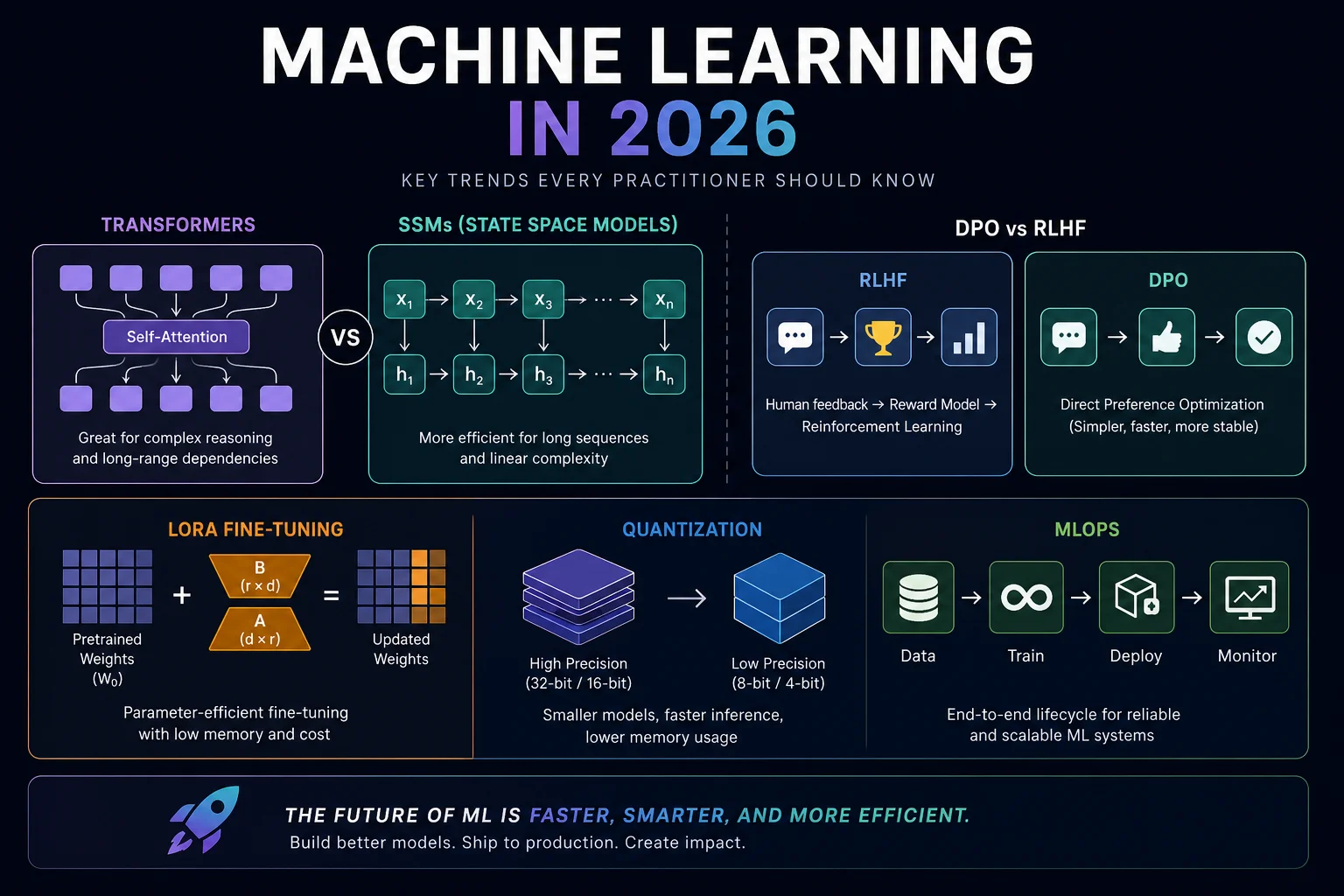
Fine-tuning in 2026 is not about teaching a model facts (RAG does that better). It is about teaching a model behavior. Full-parameter fine-tuning is reserved for the largest enterprises with massive GPU clusters, while Parameter-Efficient Fine-Tuning (PEFT)—specifically LoRA (Low-Rank Adaptation) and its variants (DoRA, LoRA+)—is the standard for most teams.
When to use fine-tuning:
- Controlling output style and tone: A financial services firm needs a model that always speaks in a formal, risk-aware tone, never uses metaphors, and always includes disclaimers. Prompt engineering can guide this, but fine-tuning on a curated dataset of thousands of example conversations ensures consistency. In 2026, Mistral AI's fine-tuning API on their open-source models is a popular choice for this, costing roughly $50 per epoch for a 7B model on 10,000 examples.
- Mastering structured output formats: If your application requires the model to output JSON with a specific schema every time (e.g., for API integration), fine-tuning is superior to prompt engineering. OpenAI reported in early 2026 that fine-tuned GPT-4o models achieved 99.2% structural compliance on complex schemas, versus 92% with prompt engineering alone.
- Reducing latency and cost at scale: A fine-tuned smaller model (e.g., Llama 4 8B) can outperform a prompted larger model (e.g., GPT-5) on a narrow, well-defined task. For a company processing 10 million requests per day, running a fine-tuned 8B model on their own hardware costs a fraction of API calls to a frontier model.
- Domain-specific reasoning: Medical diagnosis, legal argument generation, or code generation for a proprietary framework. Fine-tuning on expert-curated data (e.g., 50,000 doctor-annotated cases) fundamentally shifts the model's decision boundaries.
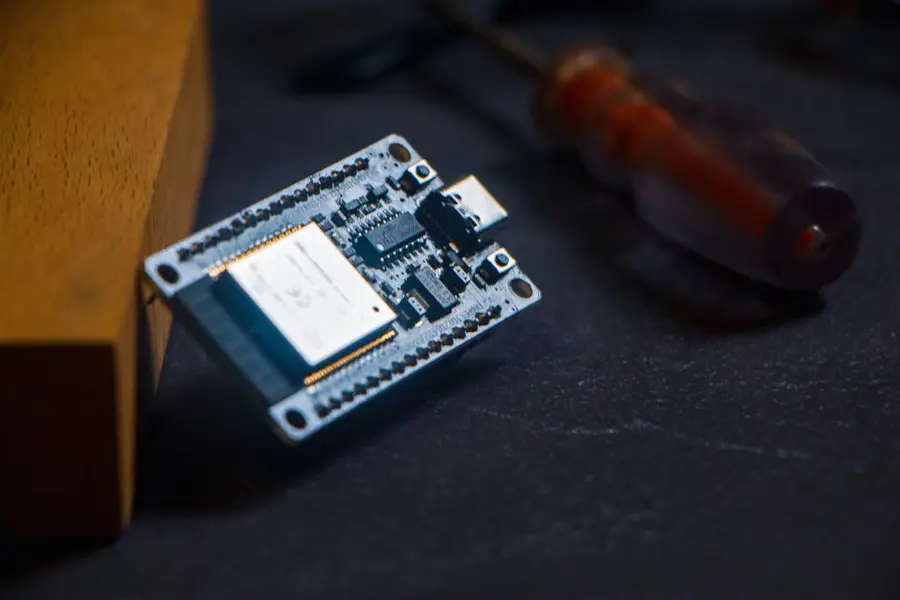
Real-world example: A leading autonomous driving company fine-tuned a Llama 4 70B model using QLoRA on 100,000 edge-case driving scenarios. The fine-tuned model was 40% better at predicting rare pedestrian behaviors compared to the base model with a carefully engineered prompt. They deployed this on embedded hardware in their vehicles.
Critical nuance for 2026: Fine-tuning does not reliably add new knowledge. The model may memorize facts from the fine-tuning dataset, but it will generalize poorly to out-of-distribution queries. The rule of thumb is: fine-tune for behavior, use RAG for knowledge.
The Hybrid Architecture: The Standard in 2026
No single technique dominates production. The most robust systems use a three-layer architecture:
- Prompt Engineering Layer: A system prompt defines the overall persona, safety guardrails, and tool-use capabilities. This is the outermost shell.
- RAG Layer: The model queries a vector database to retrieve relevant context. This provides the factual grounding for the current query.
- Fine-Tuned Core: The base model is fine-tuned for the specific output behavior (style, structure, domain reasoning). The RAG output is fed into this fine-tuned model as part of the context.
For example, a medical diagnostic assistant in 2026 uses a fine-tuned Llama 4 70B (trained on doctor-patient interaction patterns), a RAG pipeline over the latest medical journals (updated weekly), and a system prompt that enforces regulatory compliance and empathy. This hybrid approach achieves >98% factual accuracy and >95% user satisfaction, according to internal benchmarks from a major telehealth provider.
Related: Dr-DCI Gives AI Agents Full Shell Access Over Massive Document Corpora
Decision Framework for 2026
When evaluating which technique to use, ask these three questions in order:
- Is the required knowledge static or dynamic? If it changes weekly or is user-specific, use RAG. If it is fixed and deeply domain-specific, consider fine-tuning.
- Is the required output behavior consistent or variable? For variable outputs (e.g., creative writing), prompt engineering is often enough. For rigid, structured, or safety-critical outputs, fine-tuning is necessary.
- What is your latency and cost budget? Prompt engineering is cheapest and fastest to iterate. RAG adds moderate latency and infrastructure cost. Fine-tuning has high upfront cost but can reduce per-token cost at scale.
Conclusion
The era of choosing between fine-tuning, RAG, and prompt engineering is over. In 2026, the best production AI systems are deliberately hybrid, using prompt engineering for rapid iteration and guardrails, RAG for dynamic knowledge injection, and fine-tuning for behavioral consistency and cost optimization at scale. The winning strategy is to start with prompt engineering, add RAG when you need facts, and fine-tune only when you need the model to think differently—not when you need it to know more. Master this trilemma, and you control the production AI stack of the future.