Defining Physical AI: Beyond the Digital Brain
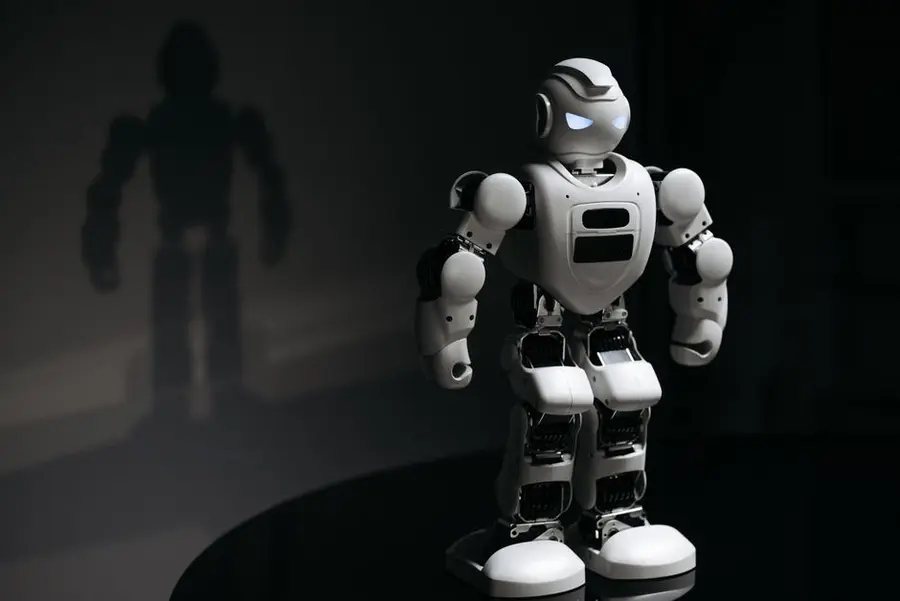
For decades, artificial intelligence has largely existed in a disembodied state. Large language models (LLMs) like GPT-4 and Gemini can write poetry, generate code, and answer trivia, but they have no hands to build, no legs to walk, and no sensors to feel the world. Physical AI is the paradigm shift that embeds intelligence into machines that can perceive, move, and act in the physical world. It is the convergence of advanced robotics, real-time perception, and decision-making algorithms that allow a machine to operate autonomously in unstructured environments.
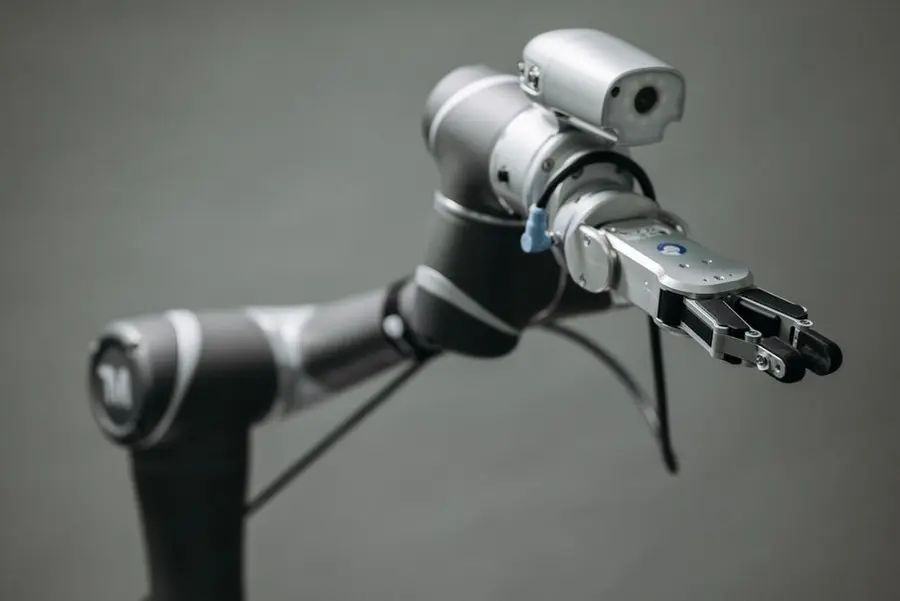
Physical AI is not a single technology. It is a stack that includes high-bandwidth sensor fusion (LiDAR, depth cameras, tactile sensors), low-latency control loops, and neural networks trained on massive datasets of physical interactions. The goal is to create systems that can generalize across tasks—a robot that can fold laundry, load a dishwasher, or navigate a cluttered construction site without being explicitly programmed for each scenario. This is fundamentally different from the scripted automation of industrial robots, which operate in carefully controlled environments.
Two organizations are currently leading the charge in defining what Physical AI can become: Google DeepMind, with its deep research into reinforcement learning and world models, and Boston Dynamics, now part of Hyundai, which has long been the benchmark for dynamic locomotion and physical agility. Their approaches are complementary—one driven by simulation and neural network architectures, the other by mechanical engineering and empirical testing—but both are converging on a shared vision of embodied intelligence.
The DeepMind Approach: Learning Physics Through Simulation
DeepMind has historically focused on training agents in simulated environments, from Atari games to the game of Go. For Physical AI, this methodology scales directly. The company's work on MuJoCo (Multi-Joint dynamics with Contact), an open-source physics simulator, has become a standard tool for training reinforcement learning (RL) agents to control robotic systems. MuJoCo allows researchers to run millions of simulated years of robot motion in a matter of hours, enabling policies that would be impractical to learn on physical hardware.
DeepMind's recent breakthroughs include RoboCat, a model that can learn to control multiple robot arms across different tasks with as few as 100 demonstrations. RoboCat uses a self-improvement loop: it watches a human teleoperate a robot, generates its own data by practicing, and then fine-tunes its policy. This is a direct step toward generalist robotic agents. Another key project is RT-2 (Robotic Transformer 2), which treats robot control as a language modeling problem. By training on both web-scale text and robot action data, RT-2 can "reason" about how to perform novel tasks—for example, moving a soda can to a picture of a person when it has never been explicitly trained to do so.
DeepMind also invests heavily in world models, neural networks that learn to predict the consequences of actions. A world model allows a robot to "imagine" what will happen if it pushes a cup, enabling it to plan sequences of actions without trial and error in the real world. This is a direct analog to the internal simulation that humans use for motor planning. The company’s Dreamer algorithm (now in version 3) learns entirely from latent representations, achieving state-of-the-art results in tasks like walking, grasping, and navigation within simulated environments, and then transferring those policies to real robots with minimal fine-tuning.
Boston Dynamics: Engineering Agility and Resilience
Boston Dynamics has taken a more hardware-centric route, but its latest robots are increasingly software-defined. The company’s Atlas humanoid robot, originally a hydraulic marvel, recently transitioned to an all-electric platform. This shift is significant: electric actuators allow for more precise force control, quieter operation, and higher reliability than the previous hydraulic system. Atlas can now perform parkour, backflips, and complex manipulation tasks, but the true innovation lies in the control stack.
Boston Dynamics uses a technique called model predictive control (MPC) in combination with real-time perception. MPC continuously solves an optimization problem to find the sequence of joint torques that will achieve a desired motion while respecting physical constraints (gravity, friction, joint limits). This is computationally expensive, but with custom onboard processors and optimized solvers, Atlas can recompute its motion plan at 100 Hz or more. The result is a robot that can recover from unexpected pushes, step over obstacles, and maintain balance on uneven terrain.
The company’s Spot robot, a quadruped now deployed in industrial settings, is a more immediate example of Physical AI in production. Spot uses a stack of neural networks for perception (semantic segmentation, object detection) and a hierarchical controller that separates high-level navigation from low-level gait generation. It can autonomously inspect pipelines, map construction sites, and carry payloads. Boston Dynamics has also released the Stretch robot, designed specifically for warehouse depalletizing and box handling. Stretch uses a suction gripper with tactile sensors and a vision system that can handle the variability of real-world boxes—different sizes, weights, and surface textures.
Key Technologies Powering the Convergence
While DeepMind and Boston Dynamics have different origins, their Physical AI stacks are converging on a common set of technologies:
- Sim-to-Real Transfer: Both organizations use high-fidelity simulation (MuJoCo, Isaac Sim) to train policies, then deploy them on real hardware. The challenge of bridging the "reality gap"—where simulated physics never perfectly matches the real world—is addressed through domain randomization, where the simulator varies friction, mass, lighting, and sensor noise during training.
- Reinforcement Learning with Reward Shaping: DeepMind’s RL agents learn by maximizing reward signals (e.g., "move forward," "don't fall"). Boston Dynamics uses RL to optimize specific behaviors like climbing stairs or recovering from a fall, often combining it with traditional control theory for safety.
- Foundation Models for Robotics: The trend toward large, pre-trained models is now entering robotics. DeepMind’s Gato model, and more recently RT-2, treat images, text, and action tokens as a single sequence, enabling zero-shot generalization. Boston Dynamics is integrating similar language-conditioned policies into Spot for natural language commands.
- Edge Computing and Low-Latency Inference: Physical AI demands real-time responses. Robots like Atlas and Spot use onboard GPUs and custom neural accelerators (e.g., NVIDIA Jetson) to run inference at sub-10ms latency, avoiding the lag of cloud-based processing.
Real-World Deployments and Current Limitations
Physical AI is moving from labs to production. Boston Dynamics’ Spot is used by BP for offshore oil rig inspections, by Leviat for construction site monitoring, and by Kongsberg for maritime safety. The robot can operate for 90 minutes on a single charge, navigate stairs, and carry a payload of 14 kg. DeepMind’s robotics division, now more tightly integrated with Google’s broader AI efforts, has deployed robots in Google’s data centers for sorting and recycling tasks. These robots use the RT-1 model to handle thousands of different objects.
However, significant limitations remain. Current Physical AI systems struggle with:
- Long-horizon tasks: Planning and executing sequences of hundreds of actions without failure is still unreliable.
- Generalization to novel environments: A robot trained in a lab kitchen may fail in a real kitchen with different lighting, counter heights, or clutter.
- Robustness to damage: Unlike biological systems, robots rarely adapt to mechanical failures (e.g., a broken joint) without explicit reconfiguration.
- Power and thermal management: High-performance computing and actuation generate heat and drain batteries, limiting operational time.
Cost is another barrier. A single Atlas robot is estimated to cost millions of dollars in R&D, while Spot retails for around $75,000. Stretch starts at $25,000. These prices are prohibitive for widespread adoption, though economies of scale and component commoditization are expected to drive costs down over the next decade.
The Road Ahead: What Developers Should Watch
For developers and tech professionals, the most actionable trends in Physical AI include the maturation of simulation tools. MuJoCo and NVIDIA Isaac Sim are now accessible to small teams and startups, allowing anyone to train robotic policies. The rise of ROS 2 (Robot Operating System) as a standard middleware, combined with hardware abstraction layers, means that code written for one robot can increasingly be ported to another.
Another key development is the emergence of robot foundation models. DeepMind’s RT-2 and PaLM-E (a vision-language-action model) demonstrate that large-scale pre-training can dramatically reduce the amount of task-specific data needed. Developers should expect to see APIs and SDKs that allow them to fine-tune these models for custom robotic applications, similar to how they would fine-tune a language model today.
Finally, safety and regulation are becoming critical. Physical AI systems that operate in public spaces or alongside humans require robust fail-safe mechanisms, certification processes, and ethical guidelines. Organizations like the IEEE Robotics and Automation Society and ISO are developing standards for autonomous mobile robots and collaborative manipulators. Developers who prioritize safety, transparency, and interpretability in their Physical AI stacks will be better positioned as regulation tightens.
Conclusion
Physical AI represents the next frontier of artificial intelligence—moving beyond text and images into the messy, dynamic, and high-stakes world of physical action. DeepMind’s simulation-driven research and Boston Dynamics’ hardware excellence are converging on a shared goal: robots that can learn, adapt, and operate with human-like versatility. While challenges of cost, generalization, and robustness remain, the pace of progress is accelerating. For developers, the tools to participate in this transformation are already here, from open-source simulators to pre-trained robotic models. The era of machines that can truly interact with the world is no longer a distant promise—it is being built, one policy and one actuator at a time.